





Real Pixel vs Virtual Pixel in LED Displays: Everything You Need to Know
Introduction
When it comes to LED displays, clarity and accuracy are everything. Whether it’s a luxury mall, airport signage, home theatre, or a live concert, the way pixels are structured directly impacts how the content looks and feels. This is where two critical concepts come into play: Real Pixel and Virtual Pixel technologies.
But what do these terms mean? How do they differ? And more importantly—which one should you choose for your project?
In this guide, we’ll break down real pixel vs virtual pixel technology, compare their strengths and limitations, and help you make the right decision for your LED screen installation.
What Are Pixels in LED Displays?
Before diving into the comparison, let’s understand the basics.
A pixel in an LED display is the smallest unit that produces light and color. Each pixel is typically made up of three diodes: red, green, and blue (RGB). By adjusting brightness and intensity, these diodes create millions of color combinations, resulting in the stunning visuals we see on LED screens.
Pixel quality determines:
- Resolution (clarity of image/video)
- Viewing distance (how close you can stand before it looks pixelated)
- Brightness and sharpness (impactful visuals even under sunlight)
Now, let’s see how real pixel and virtual pixel technologies interpret and display these RGB units differently.
What is Real Pixel Technology?
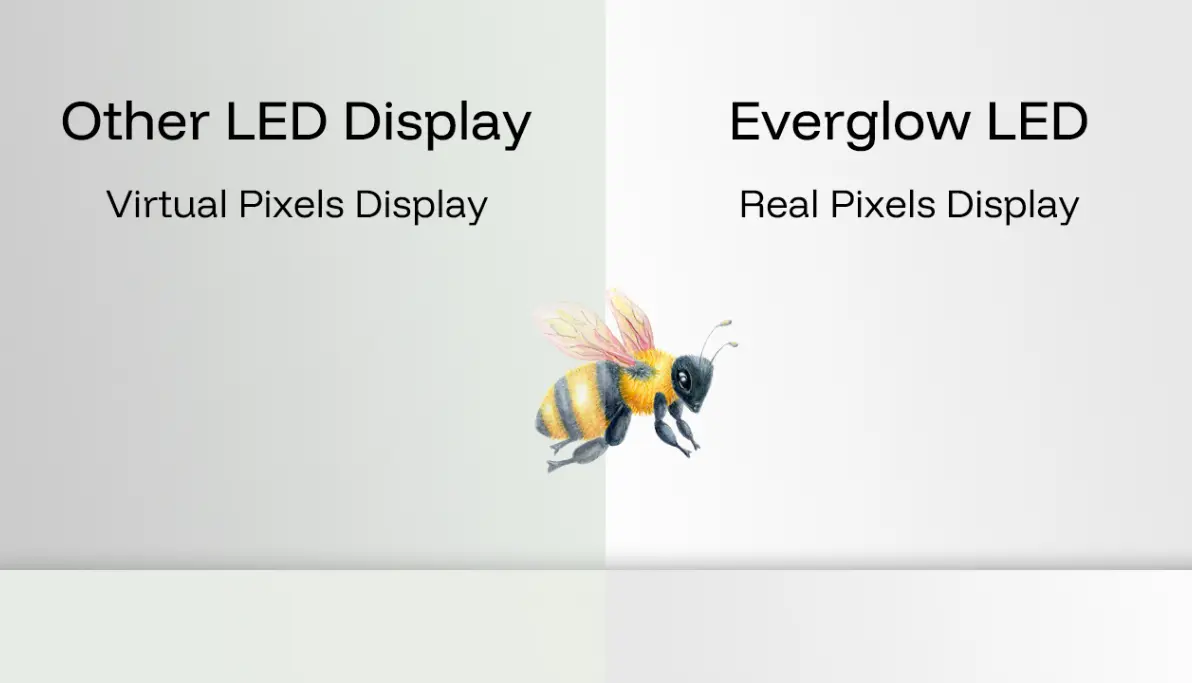
Real Pixel technology means one physical pixel = one display pixel.
In simple terms: each RGB cluster (red, green, blue diode) forms a single pixel. When your screen resolution is 100,000 pixels, it means there are exactly 100,000 physical pixel clusters built into the LED panel.
✅ Advantages of Real Pixel
- True-to-life clarity: Each physical diode contributes directly to the output.
- High brightness: Since all diodes work independently, brightness levels are strong.
- Consistency: No duplication or artificial manipulation—what you see is what’s produced.
- Durability: Fewer processing demands mean less stress on controllers and chips.
- Best for close-up viewing: Real pixel LEDs excel in scenarios where people stand close to the screen, like home theatres, auditoriums, and luxury retail.
❌ Limitations of Real Pixel
- Higher cost: Since each display pixel requires a physical diode, the LED density is higher.
- Power consumption: More physical LEDs = more energy usage.
- Less flexible with lower resolutions: To achieve HD/4K, you need a denser panel.
What is Virtual Pixel Technology?
Virtual Pixel technology (also called pixel-sharing or pixel multiplication) uses software-based processing to make fewer physical LEDs appear as more pixels.
Here’s how it works: A single red, green, and blue diode cluster can be used in multiple combinations with neighboring diodes to simulate extra pixels. For example, one real pixel might be calculated to represent up to four virtual pixels.
In short: the display resolution appears higher than the actual physical diode count.
✅ Advantages of Virtual Pixel
- Cost-effective: Requires fewer physical LEDs to produce higher “virtual resolution.”
- Energy efficient: Less diode density = lower power consumption.
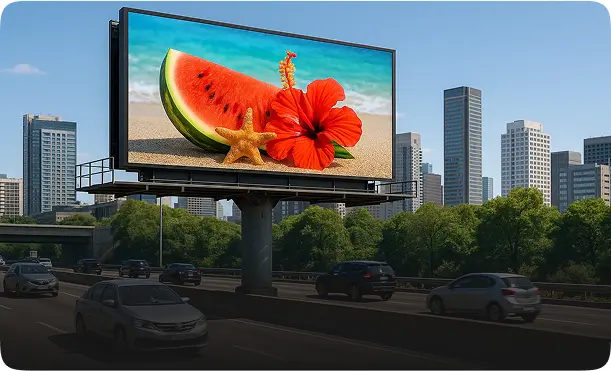
- Great for long-distance viewing: Works well for billboards, outdoor advertising, and stadium displays where viewers are far away.
- Simulates higher resolution affordably: A screen might physically be P10, but with virtual pixel processing, it can look closer to P5.
❌ Limitations of Virtual Pixel
- Artificial sharpness: Since it’s software-simulated, the clarity isn’t as sharp as real pixel.
- Lower brightness: Sharing LEDs reduces maximum brightness output.
- Not ideal for close viewing: From nearby, pixel duplication can make content look blurry.
- Complex processing: Relies heavily on controllers, increasing chances of lag or glitches.
Real Pixel vs Virtual Pixel: Key Differences
Feature
- Real Pixel
- Virtual Pixel
- Definition
One physical RGB cluster = one pixel
Software creates multiple “virtual” pixels from one RGB cluster
Resolution
- True, physical resolution
- Artificially enhanced resolution
Clarity
- Superior, sharper
- Moderate, depends on distance
Brightness
- Higher (each LED works fully)
- Lower (shared LEDs)
Viewing Distance
- Best for close-up (indoor, premium)
- Best for long-distance (outdoor, OOH)
Cost
- Higher
- More affordable
Power Consumption
- Higher
- Lower
Applications
- Indoor fine-pitch displays, luxury retail, home theatres, corporate
- Outdoor billboards, stadiums, transit hubs
Durability
- High (simple processing)
- Moderate (depends on controllers)
Which One Should You Choose?
Your choice depends on where and how you’re using the LED screen:
- ✅ Choose Real Pixel if:
- ✅ Choose Virtual Pixel if:
Everglow’s Expertise in Pixel Technology
At Everglow, we engineer both real pixel and virtual pixel LED displays, customized for your project’s unique needs.
- Our Aura COB Series is built on real pixel fine-pitch technology, perfect for 16K indoor viewing, home theatres, and conference rooms.
- Our Spectra and Profro series offer scalable solutions for auditoriums, OOH, and commercial projects, balancing cost-effectiveness with performance.
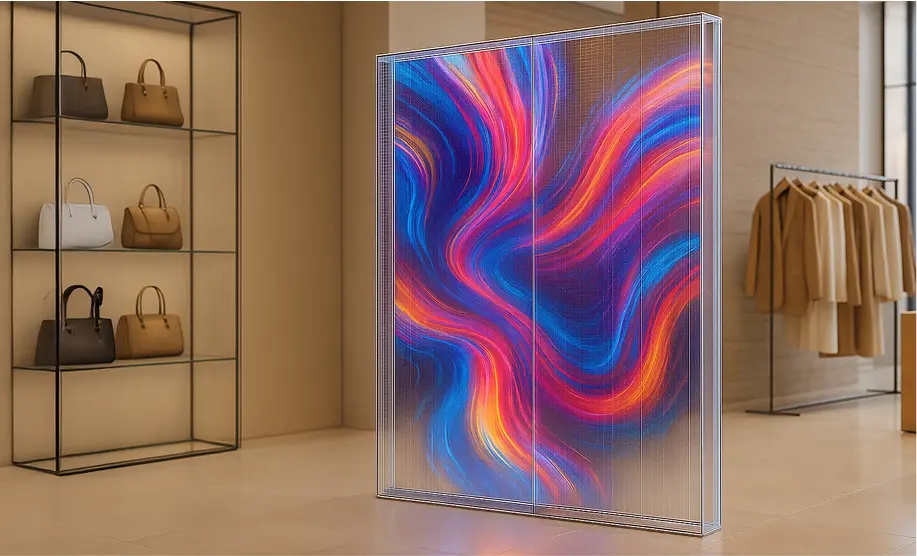
- Our Vertex and Creativeverse innovations bring flexibility with curved, circular, transparent, and kinetic LED displays that can adapt to any space—whether real or virtual pixel-based.
With over 20 years of experience and 30,000 sq. ft of manufacturing space in India, Everglow is trusted by top brands, architects, and institutions to deliver LED displays that inspire awe.
Conclusion
The debate between real pixel vs virtual pixel isn’t about which one is “better”—it’s about choosing the right fit for your space, audience, and goals.
- If sharpness, premium quality, and close viewing matter most → Go with Real Pixel.
- If scale, cost-efficiency, and long-distance visibility are priorities → Virtual Pixel is your choice.
At Everglow, we help you make this decision with personalized consultation, demos, and end-to-end support—so your investment delivers maximum impact.
👉 Ready to discover the right LED for your next project? Contact Everglow today and experience the brilliance of displays that capture awe.

Rule of Thumb
• Real P0.7: ~4 million LEDs per square metre• Virtual P0.7: ~1 million LEDs per…

P0.7 VIRTUAL PIXEL (Marketing P0.7)
The reality:The physical LED pitch is larger (typically around P1.2 to P1.4).Software algorithms create additional…

P0.7 REAL PIXEL (True P0.7)
What it means:Each pixel is physically present on the LED panel.One RGB cluster equals one…